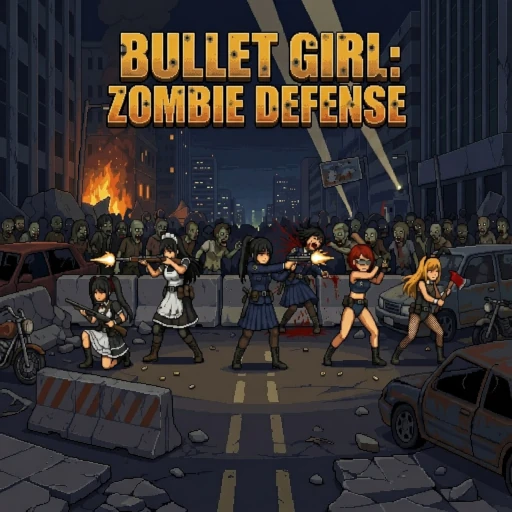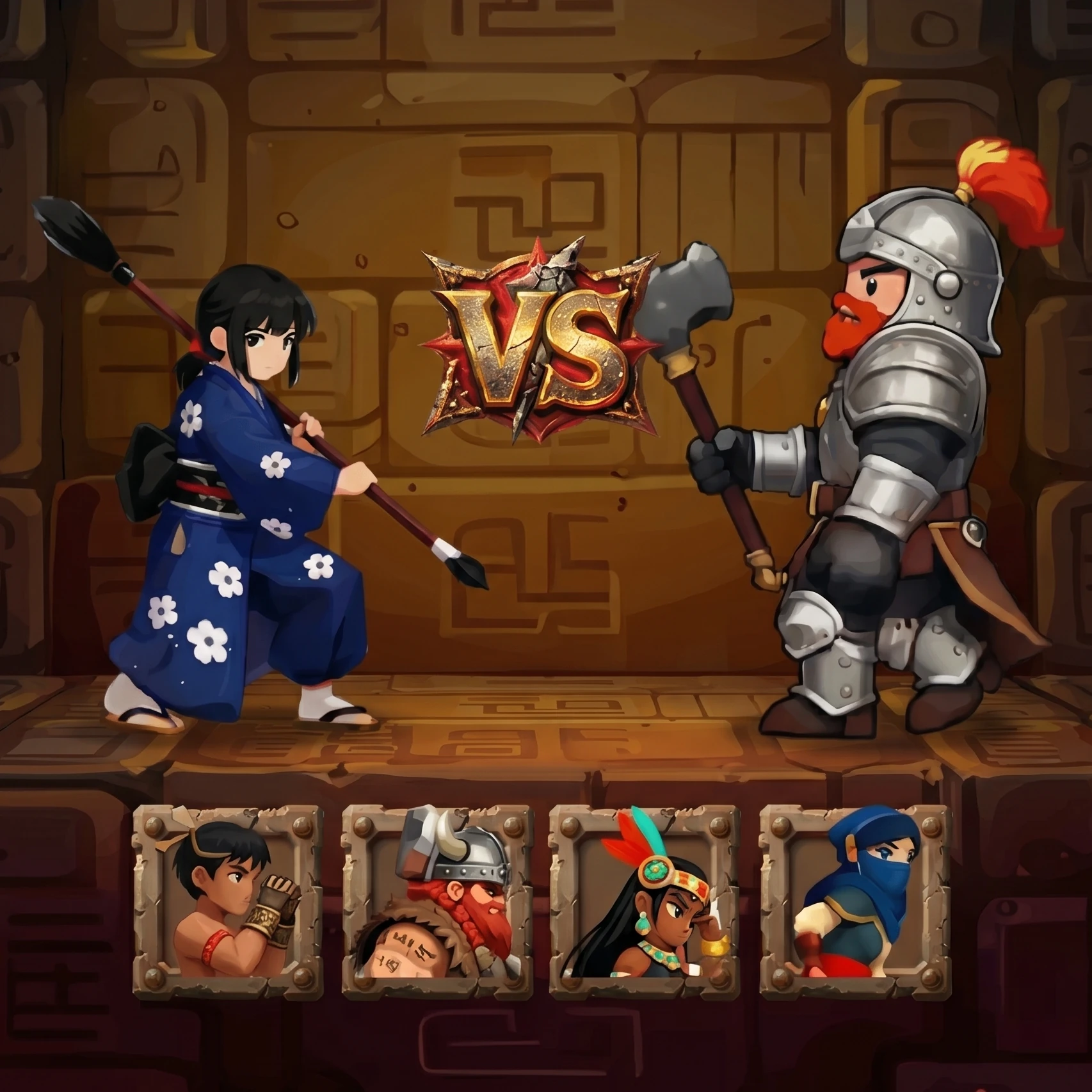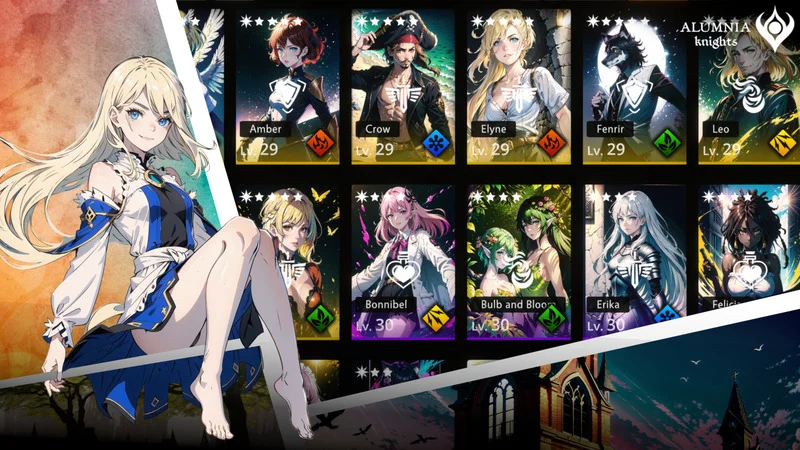
Alumnia Knights is a fantasy RPG built in Unity by Bouchier Tristan (known as Sheyn) — a sprawling, lore-heavy world where players join a cast of Knights to seal rifts, battle monsters, and push back the influence of Outer Gods. The game features a roster of distinct playable characters across multiple roles: Dealer, Tank, Healer — each with their own personality, abilities, and animations.
The Problem: Every Character Needs to Move
Available on PC, Android, WebGL, and Linux, with support for six languages, Alumnia Knights is an ambitious undertaking for a single developer. And at the center of it all is a battle system that needed to feel alive.
The Solution: Every Character Animation, Made with Ludo
Alumnia Knights isn't a game where characters stand still. Its battle system is built around animated sprites: characters that swing, cast, idle, and react in real time. Every single character in the game needs a full set of sprite animations to function.
What Made It Work
For a solo developer, that's a production challenge with no clean solution. Hand-animating a full roster of characters across multiple animation states is the kind of work that can consume an entire development cycle before the actual game design gets attention.
From Ludo to Unity
Bouchier needed a pipeline that would let him generate quality animations quickly, keep them consistent across the roster, and integrate them cleanly into Unity.
Beyond the Pipeline
Bouchier's approach was direct: use Ludo.ai for every character spritesheet in the game.
Play Alumnia Knights
"For the battle system, every single character's spritesheets on my game were made with Ludo.ai. Meaning that every character animation and movements — so basically what makes the game feel alive — were made with Ludo."
— Sheyn (Bouchier Tristan), Developer, Alumnia Knights
Not some characters. Not a subset of animations. Every one.
This wasn't a shortcut for a single bottleneck. It became the foundation of the entire battle system's visual production.
Bouchier landed on Ludo.ai for a specific set of reasons, each one addressing a real constraint of solo game development.
Iteration speed. Getting to a usable result didn't require burning through dozens of attempts: